SEARCH WHAT YOU WANT
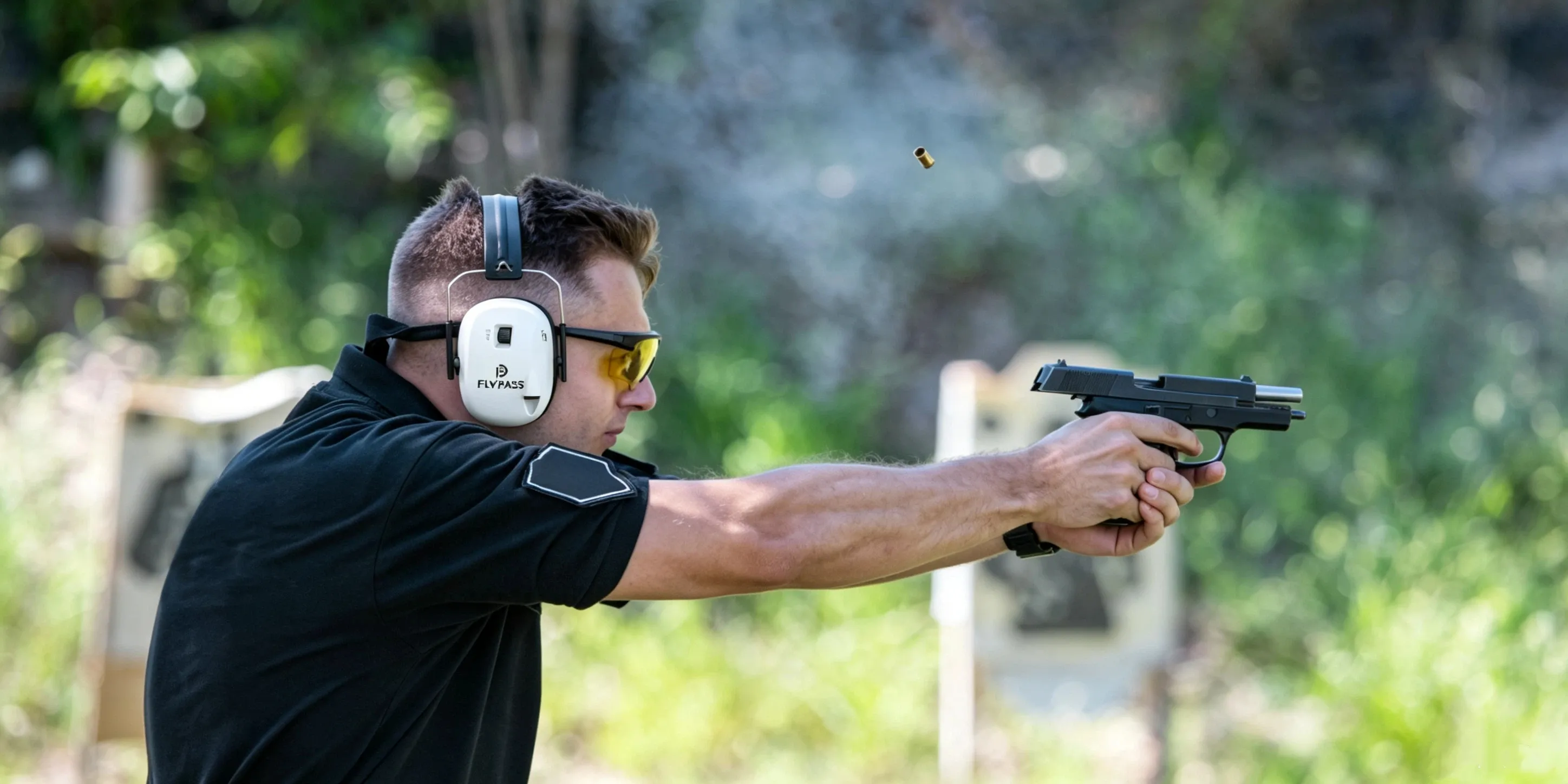
You've heard it — that one guy at the range everyone assumes is just being inconsiderate. The one whose gun sounds like it's twice as loud as everyone else's. The one who makes you wince every single time he sends a round downrange.
But before you write him off as "that guy," ask yourself something: have you ever actually checked whether your own ear protection is sealing the way it's supposed to? Because there's a decent chance the noise problem at your range isn't a courtesy problem at all. It's a fit problem — and almost nobody's talking about it that way.
The Explanation Everyone Defaults To
Most range etiquette guides cover this the same way. Be considerate of other shooters. Don't bring out your loudest, most obnoxious caliber on a crowded day. If you own a suppressor, use it. All solid advice, and none of it wrong.
But it puts the entire burden on behavior — on shooters choosing to be quieter, more careful, more self-aware. What it doesn't ask is a more basic question: if everyone at the range is already wearing hearing protection, why does the noise still get through to some people worse than others, even when they're standing in the same lane, wearing similar gear, hearing the same gun?
The Noise Itself Isn't Up for Debate
A standard 9mm handgun produces somewhere around 160 decibels at the muzzle. Sustained exposure to anything above 85 decibels can cause permanent hearing damage — and a gunshot isn't sustained, it's an instant, sharp spike that hits your eardrum before your brain has time to react. That's the entire reason electronic hearing protection exists as its own category of gear, not just a nice-to-have.
So the stakes are real. But here's the part that gets skipped: wearing hearing protection and actually being protected are two different things.
The Real Reason Protection Fails Isn't the Person — It's the Seal
Ear muffs are designed and rated as a sealed system. In a lab, that seal is tested clean, against a bare head, with nothing else competing for the same real estate.
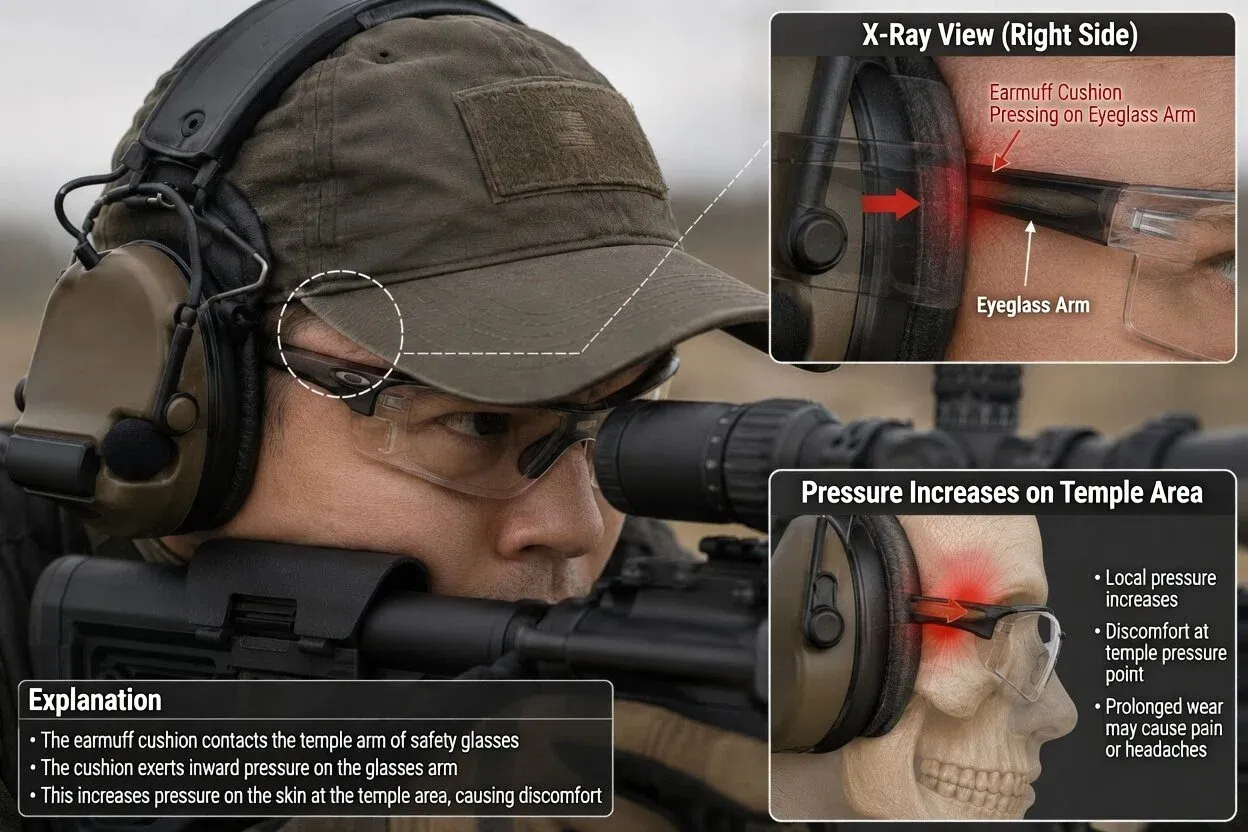
Now put on a pair of shooting glasses. The temples run directly across the exact spot where that seal needs to sit flush against your skull. That's not a manufacturing defect in either product — it's just physics. Ears need a seal. Eyes need temples to hold a lens in place. Both needs occupy the same narrow strip of space on your head, and almost nothing on the market is designed with that overlap in mind.
The result is a gap. A small one, often invisible unless you go looking for it, right where your glasses cross the edge of your ear cup. And a gap in a hearing protection seal doesn't just let in a little extra sound — it defeats the rating the product was tested at in the first place.
So the next time someone's gun sounds unreasonably loud to you, or your own ears are ringing after a session where you were "protected" the whole time, it's worth asking a different question than the ones most etiquette guides raise. Not "was that shooter being rude," but "was my gear actually sealed."
What Actually Helps
A few things worth checking, regardless of what brand of eyewear or ear pro you're running:
Do the seal check. Take your glasses off and put your ear muffs on alone. Notice how they sit — fully flush, no pressure points. Now put your glasses back on underneath. If you can feel or see a gap forming at the temple, that's the same gap letting sound through.
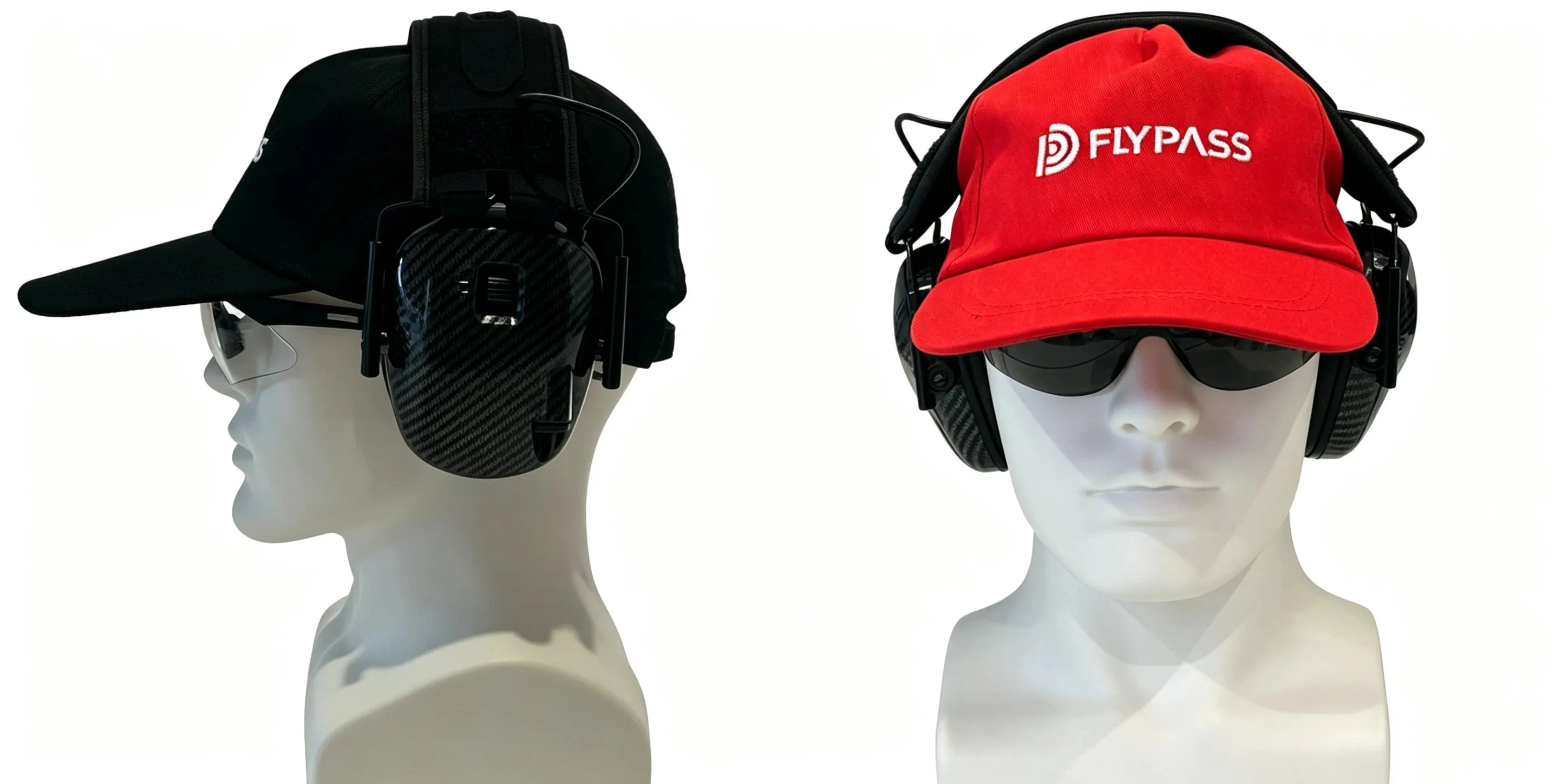
Pay attention to temple thickness. Thinner, flatter temples cross the seal with less disruption than thick, chunky arms. If you're shooting for hours at a time, this detail matters more than people think.
Layer correctly if you're doubling up. Foam plugs under muffs can help compensate for a compromised seal, but only if the plugs themselves are inserted correctly — half the benefit of double protection is lost with a bad plug fit.
Don't assume louder gear means a worse shooter. Sometimes the person who sounds "too loud" is running the exact same setup as you, but their seal happens to be worse that day, or their gear was never matched to fit each other in the first place.
It's Not About Blaming Anyone
None of this is about excusing genuinely reckless behavior at the range — bringing out something absurdly loud on a packed indoor lane just to show off is still bad etiquette, full stop. But most of the day-to-day noise frustration at any range isn't caused by people behaving badly. It's caused by two separate products — eyewear and hearing protection — that were never designed with each other in mind, doing exactly what they were built to do, just not doing it well together.
That's the problem we've been thinking about at Flypass since day one: not how to make louder guns quieter, but how to make eye protection and ear protection actually work as one system instead of fighting each other for the same inch of space. More on that soon.
In the meantime — if this is the first time you've thought about your own seal instead of the guy two lanes down, that's already a more useful place to start than most range etiquette advice gets you.
Got a noise story of your own? We're talking about this exact thing on Facebook Group— come tell us about the loudest thing you've ever heard at a range, and whether it was actually the gun or the gap in your gear.
You've heard it — that one guy at the range everyone assumes is just being inconsiderate. The one whose gun sounds like it's twice as loud as everyone else's. The one who makes you wince every single time he sends a round downrange.
But before you write him off as "that guy," ask yourself something: have you ever actually checked whether your own ear protection is sealing the way it's supposed to? Because there's a decent chance the noise problem at your range isn't a courtesy problem at all. It's a fit problem — and almost nobody's talking about it that way.
The Explanation Everyone Defaults To
Most range etiquette guides cover this the same way. Be considerate of other shooters. Don't bring out your loudest, most obnoxious caliber on a crowded day. If you own a suppressor, use it. All solid advice, and none of it wrong.
But it puts the entire burden on behavior — on shooters choosing to be quieter, more careful, more self-aware. What it doesn't ask is a more basic question: if everyone at the range is already wearing hearing protection, why does the noise still get through to some people worse than others, even when they're standing in the same lane, wearing similar gear, hearing the same gun?
The Noise Itself Isn't Up for Debate
A standard 9mm handgun produces somewhere around 160 decibels at the muzzle. Sustained exposure to anything above 85 decibels can cause permanent hearing damage — and a gunshot isn't sustained, it's an instant, sharp spike that hits your eardrum before your brain has time to react. That's the entire reason electronic hearing protection exists as its own category of gear, not just a nice-to-have.
So the stakes are real. But here's the part that gets skipped: wearing hearing protection and actually being protected are two different things.
The Real Reason Protection Fails Isn't the Person — It's the Seal
Ear muffs are designed and rated as a sealed system. In a lab, that seal is tested clean, against a bare head, with nothing else competing for the same real estate.
Now put on a pair of shooting glasses. The temples run directly across the exact spot where that seal needs to sit flush against your skull. That's not a manufacturing defect in either product — it's just physics. Ears need a seal. Eyes need temples to hold a lens in place. Both needs occupy the same narrow strip of space on your head, and almost nothing on the market is designed with that overlap in mind.
The result is a gap. A small one, often invisible unless you go looking for it, right where your glasses cross the edge of your ear cup. And a gap in a hearing protection seal doesn't just let in a little extra sound — it defeats the rating the product was tested at in the first place.
So the next time someone's gun sounds unreasonably loud to you, or your own ears are ringing after a session where you were "protected" the whole time, it's worth asking a different question than the ones most etiquette guides raise. Not "was that shooter being rude," but "was my gear actually sealed."
What Actually Helps
A few things worth checking, regardless of what brand of eyewear or ear pro you're running:
Do the seal check. Take your glasses off and put your ear muffs on alone. Notice how they sit — fully flush, no pressure points. Now put your glasses back on underneath. If you can feel or see a gap forming at the temple, that's the same gap letting sound through.
Pay attention to temple thickness. Thinner, flatter temples cross the seal with less disruption than thick, chunky arms. If you're shooting for hours at a time, this detail matters more than people think.
Layer correctly if you're doubling up. Foam plugs under muffs can help compensate for a compromised seal, but only if the plugs themselves are inserted correctly — half the benefit of double protection is lost with a bad plug fit.
Don't assume louder gear means a worse shooter. Sometimes the person who sounds "too loud" is running the exact same setup as you, but their seal happens to be worse that day, or their gear was never matched to fit each other in the first place.
It's Not About Blaming Anyone
None of this is about excusing genuinely reckless behavior at the range — bringing out something absurdly loud on a packed indoor lane just to show off is still bad etiquette, full stop. But most of the day-to-day noise frustration at any range isn't caused by people behaving badly. It's caused by two separate products — eyewear and hearing protection — that were never designed with each other in mind, doing exactly what they were built to do, just not doing it well together.
That's the problem we've been thinking about at Flypass since day one: not how to make louder guns quieter, but how to make eye protection and ear protection actually work as one system instead of fighting each other for the same inch of space. More on that soon.
In the meantime — if this is the first time you've thought about your own seal instead of the guy two lanes down, that's already a more useful place to start than most range etiquette advice gets you.
Got a noise story of your own? We're talking about this exact thing on Facebook Group— come tell us about the loudest thing you've ever heard at a range, and whether it was actually the gun or the gap in your gear.
Previous: No more data